
EV Charging Station: What If EV Charging Also Became a Digital Service Point?
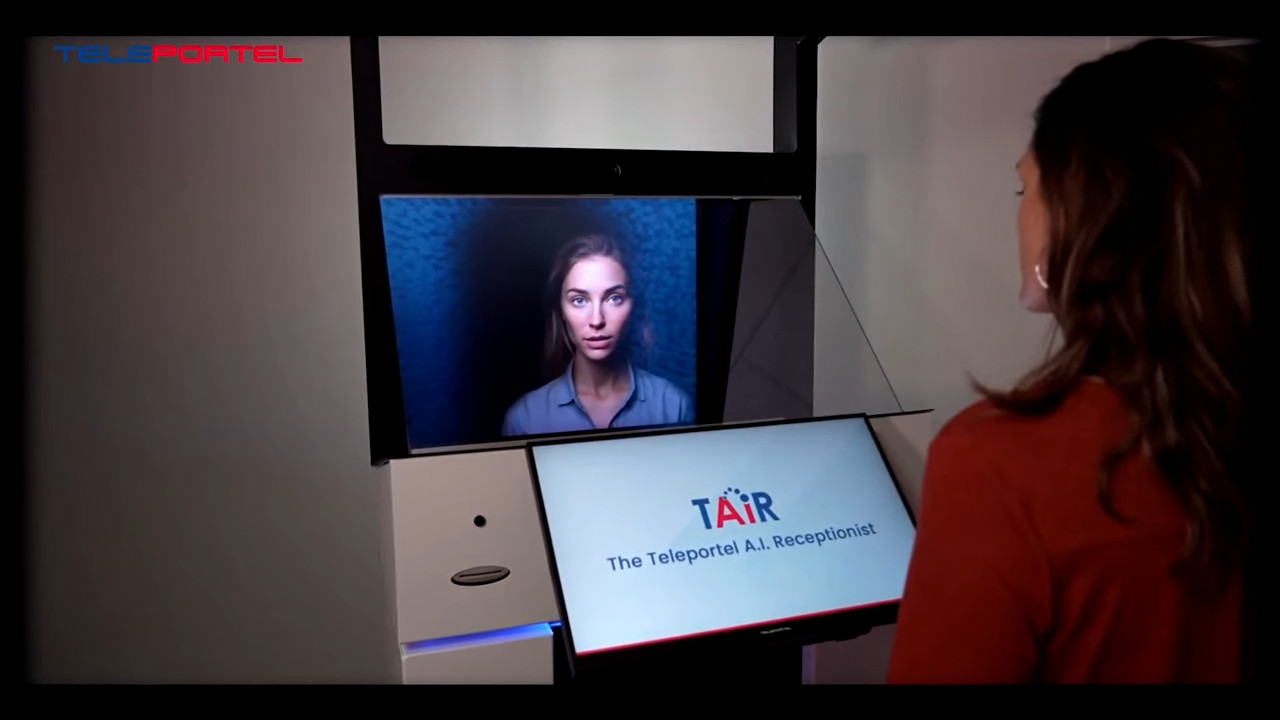
An EV charging station charges a vehicle. But while the vehicle is charging, what is the space around the charger doing?
EV charging stations and electric charging stations are now found in company parking lots, hotels, shopping centers, car dealerships, service stations, buildings, logistics sites, and many other locations.
EV charging station for the car + Teleportel kiosk for the person.
While the vehicle is charging, the user could browse information, request assistance, contact an agent by video, check in, scan a QR code, identify themselves, receive instructions, discover promotions, or access services available at that location.
The electric charger serves the vehicle. Teleportel can serve the person standing beside it.
Visitors: Transform Arrival into a Digital Journey
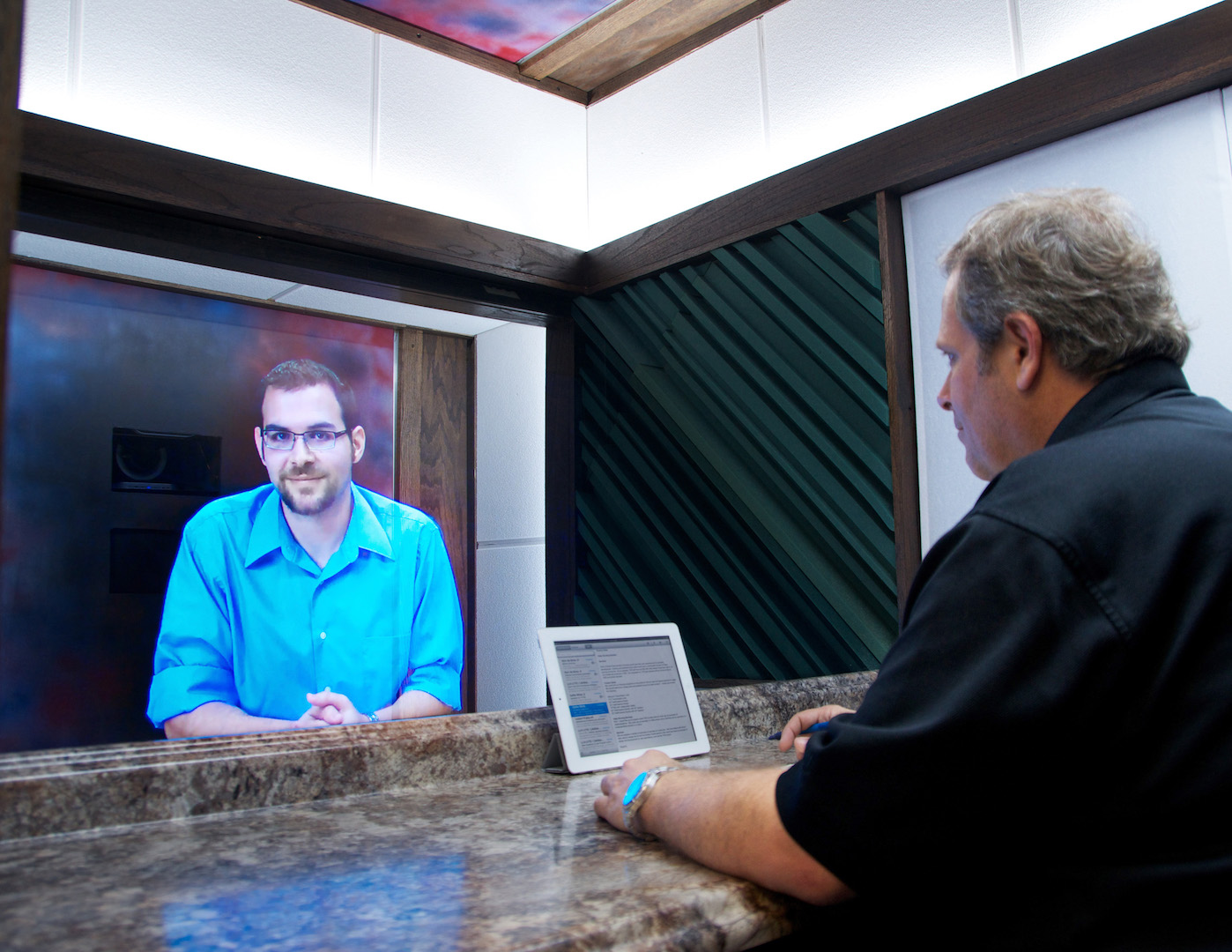
Visitors are one of the clearest examples of how a physical location can become a connected service point. A visitor may still arrive, search for reception, wait for an employee, explain the appointment, wait for the host to be contacted and receive a badge manually.
That journey can be redesigned. Before arriving, a visitor can be pre-registered and receive a QR code. At arrival, a Teleportel kiosk can launch the digital journey.
Visitors who only need a standard process can move through quickly. When a situation requires human intervention, the kiosk can establish a live connection with a real remote agent. The visitor is therefore not abandoned in front of a machine: automation and human assistance can work together.
Visitor Parking: Why Wait Until the Building Entrance?
The experience can begin directly in the visitor parking area. A person can scan a QR code or identify themselves, retrieve an appointment, receive instructions, notify the host and — where the project integrations allow it — continue into the appropriate access workflow.
The visitor parking area can therefore become the first stage of a connected reception journey.
Digital Classroom: What If the Expert Could Be Present Remotely?
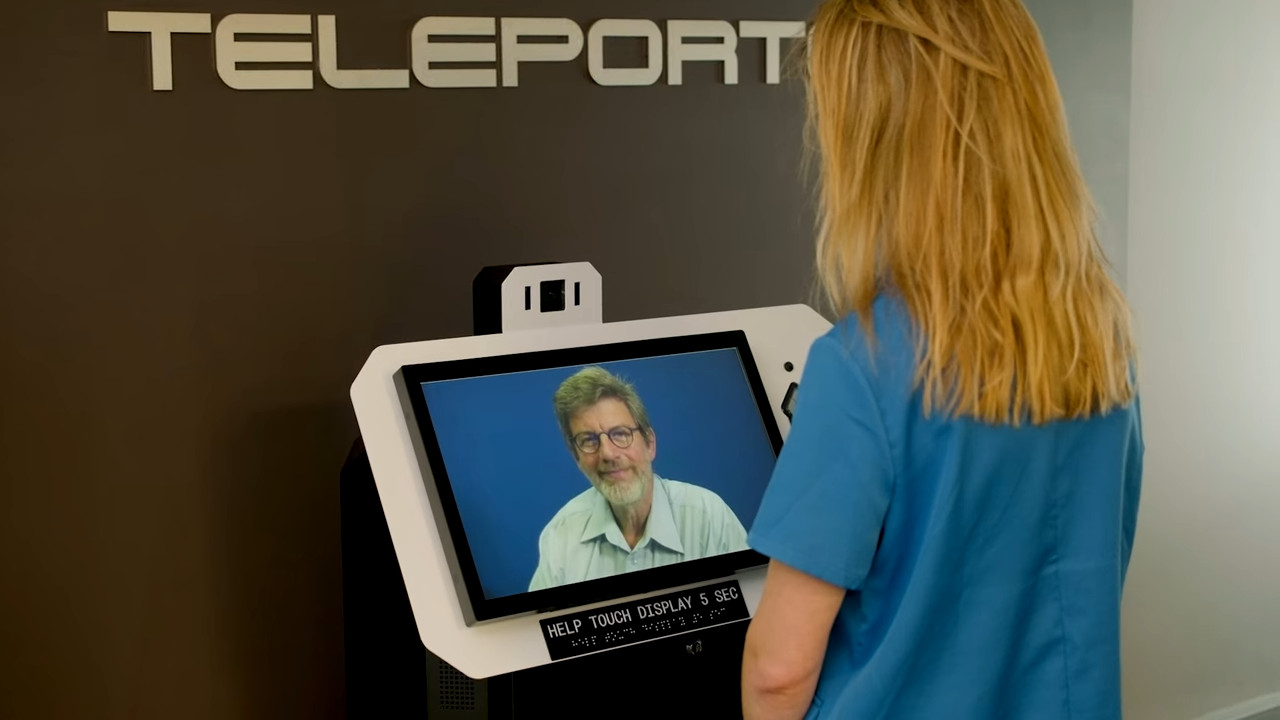
A digital classroom uses technology to enhance education and remote collaboration. But the concept can go further than a screen displaying a conventional video call.
Imagine a room where a teacher, trainer, specialist or expert located elsewhere can appear through a telepresence device and communicate with the people present.
Teleportel's remote communication and 2D or 3D telepresence technologies can inspire applications in training, specialized assistance, demonstrations and knowledge sharing.
Instead of always moving the expert, bring the expert's presence to the location.
Kiosk: What Can a Kiosk Actually Do Today?
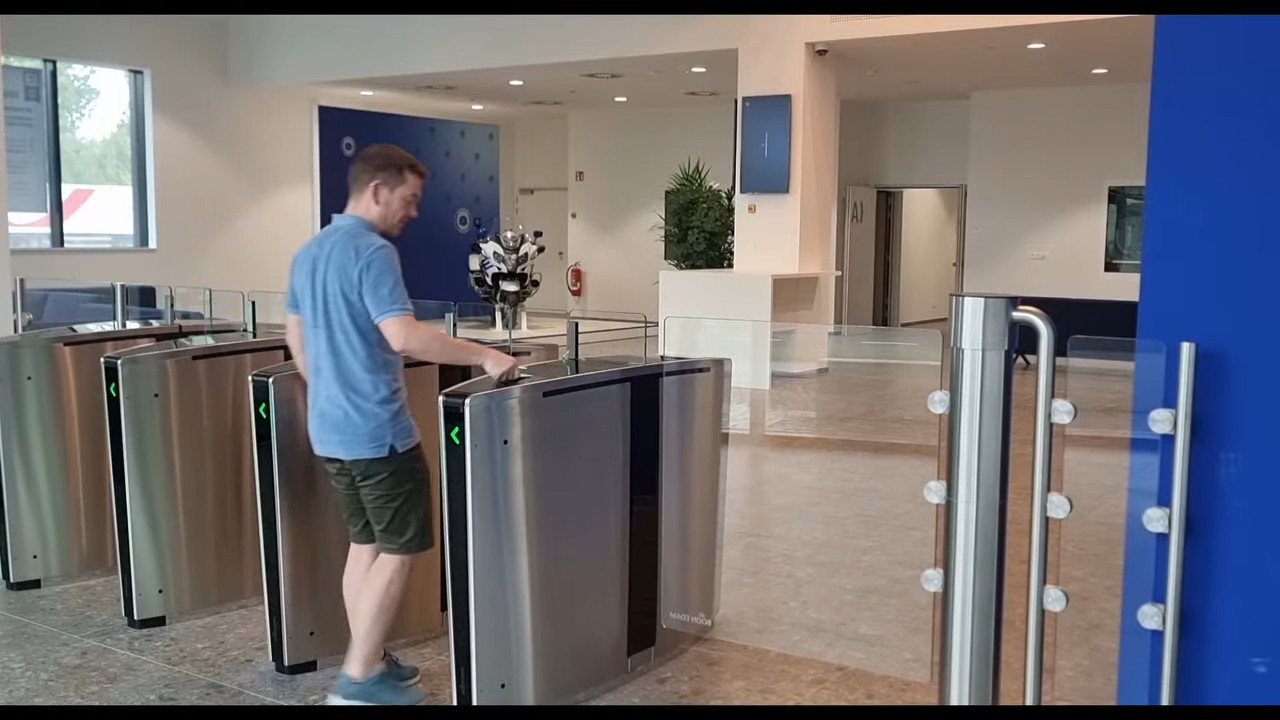
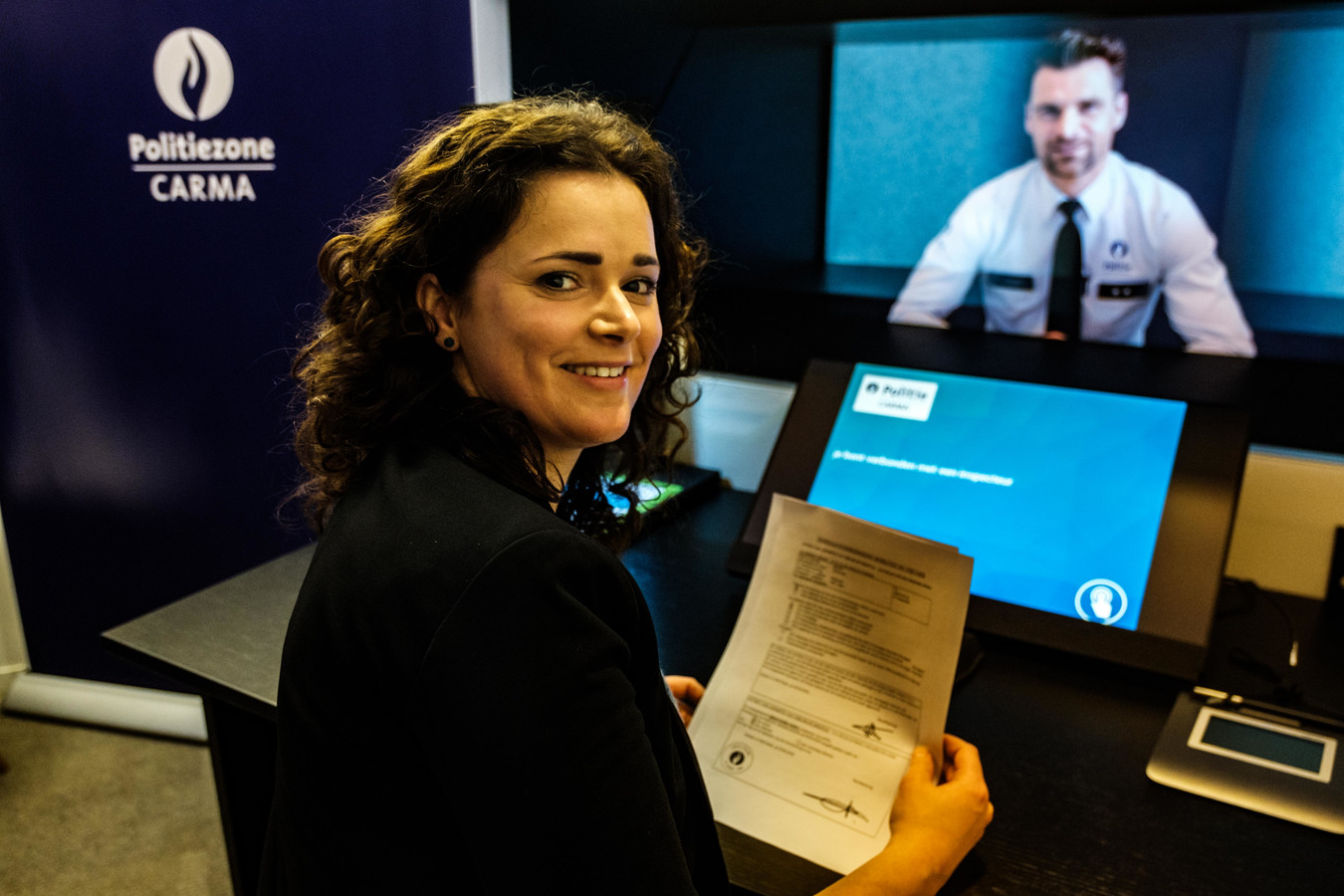
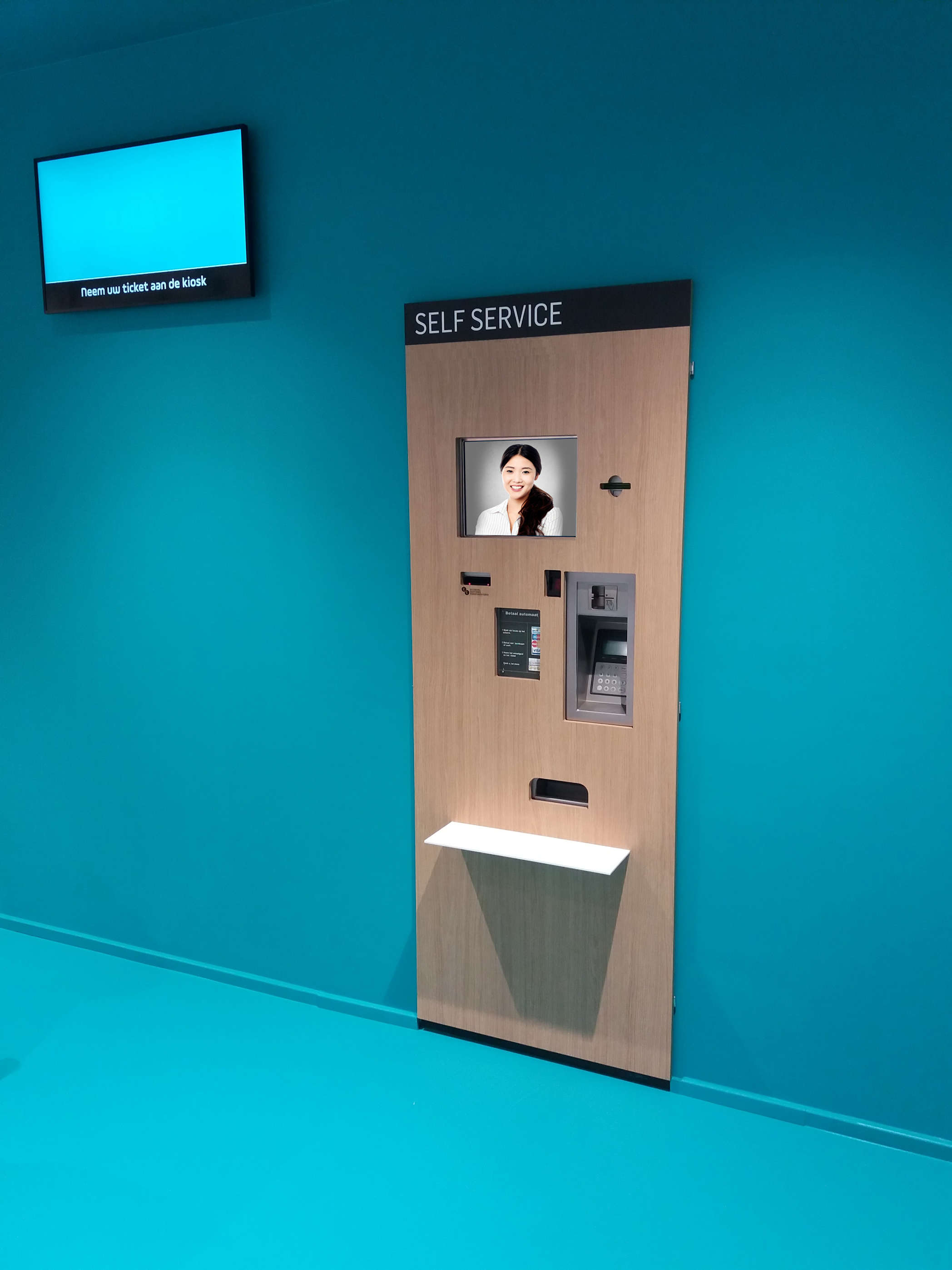
The word kiosk can describe many things: an EV charging kiosk, reception kiosk, information kiosk, ordering kiosk, interactive kiosk, video kiosk, check-in kiosk, identification kiosk, service kiosk or AI-powered kiosk.
Modern kiosks no longer need to be single-purpose machines. A new-generation kiosk can become an interface between a person and multiple systems.
- Touch interaction
- Live video
- QR codes
- Badge workflows
- RFID & NFC
- Scanning & printing
- Artificial intelligence
- Business-system integrations
Phygital: When a Physical Location Becomes Interactive
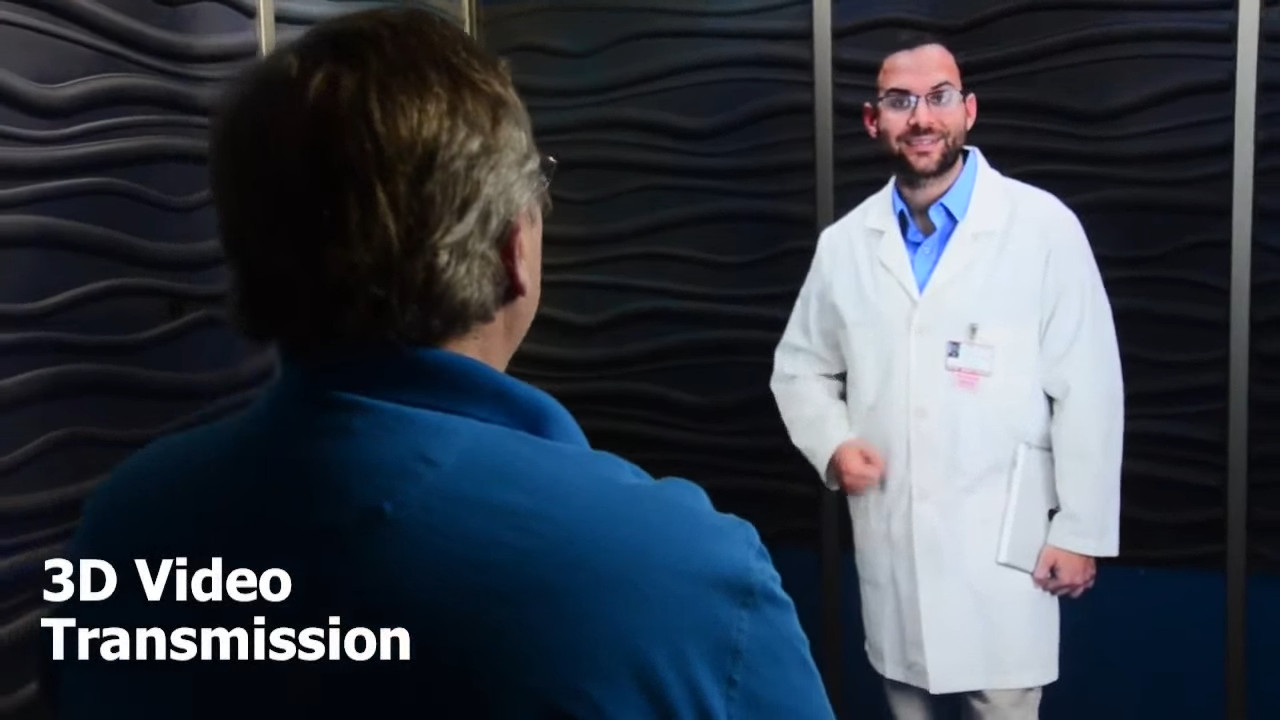
Phygital is the meeting point between physical and digital experiences. A building, parking lot, store, reception area or showroom is physical — but the experience taking place there can be digital.
A user can stand physically in front of a kiosk while the agent assisting them is somewhere else. A person can scan an RFID badge or use NFC while a system digitally verifies permissions. A visitor can stand in front of a screen while speaking with AI or a real remote human.
Teleportel can become one of the connection points between those two worlds.
Dynamic Screen: What If the Screen Could Also Respond?
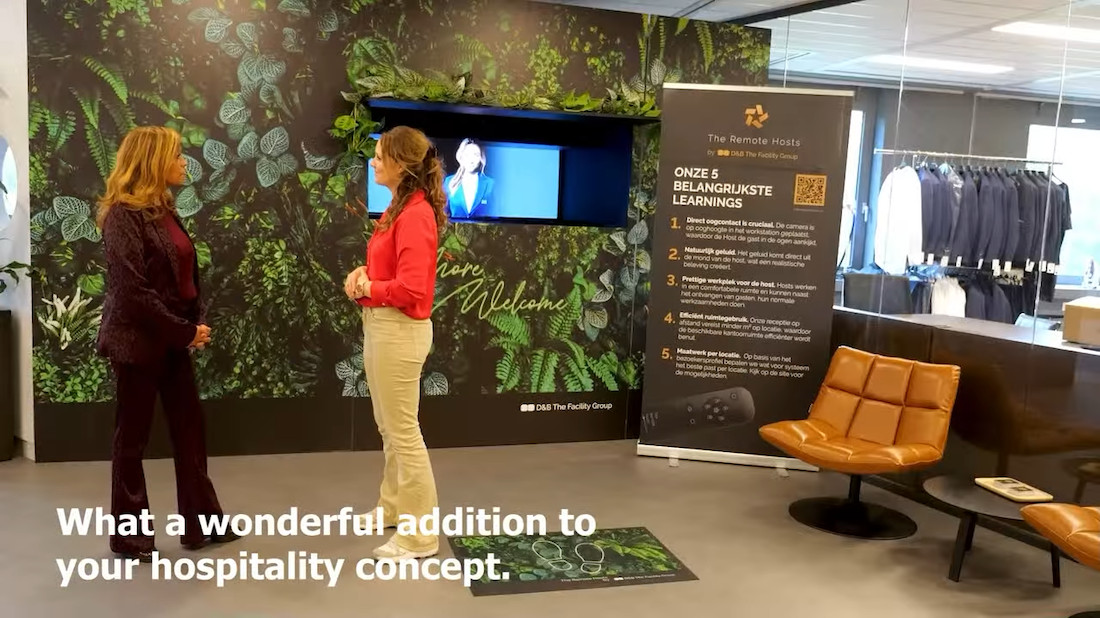
A dynamic screen displays changing content. Dynamic screens are used in stores, lobbies, showrooms, hotels, companies, trade shows and public spaces.
The next step is moving from watching to interacting. A connected interface can add selection, identification, AI assistance, video calls, advisor connection or workflow activation.
A digital display can therefore become more than a communication medium when it is integrated into an interactive service experience.
Gobo Projector: Attract Attention, Then Enable Interaction

A gobo projector can project logos, patterns or messages into a physical space and attract attention toward a location, brand, product or direction.
Teleportel does not need to replace the gobo projector. The kiosk can become the interactive step that follows it.
Hologram Fan and Holographic Fans: From Visual Effect to Presence
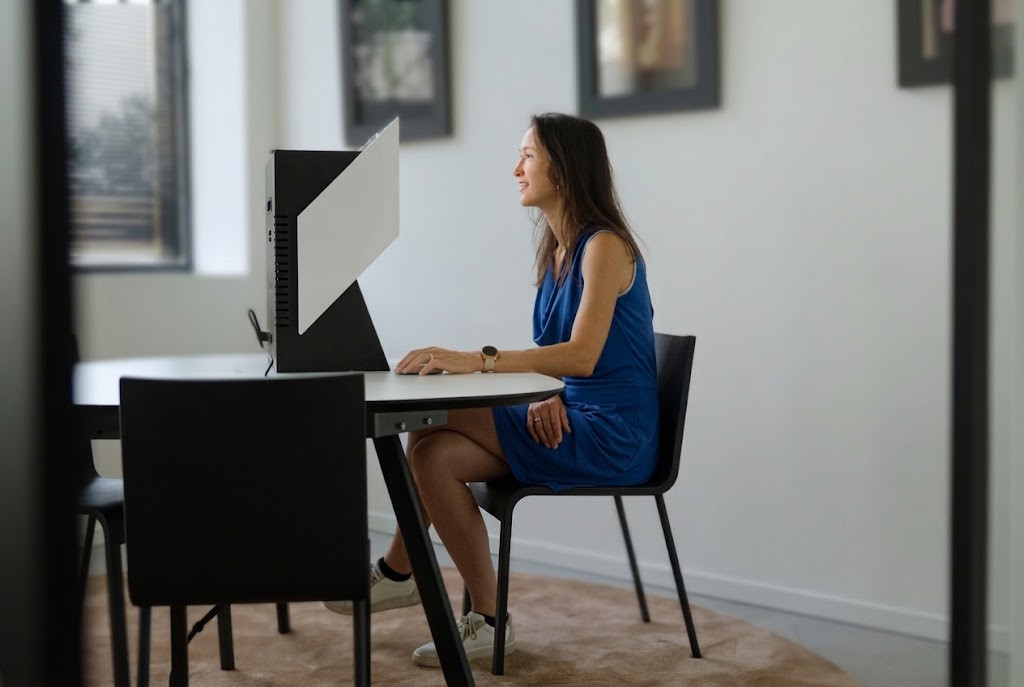
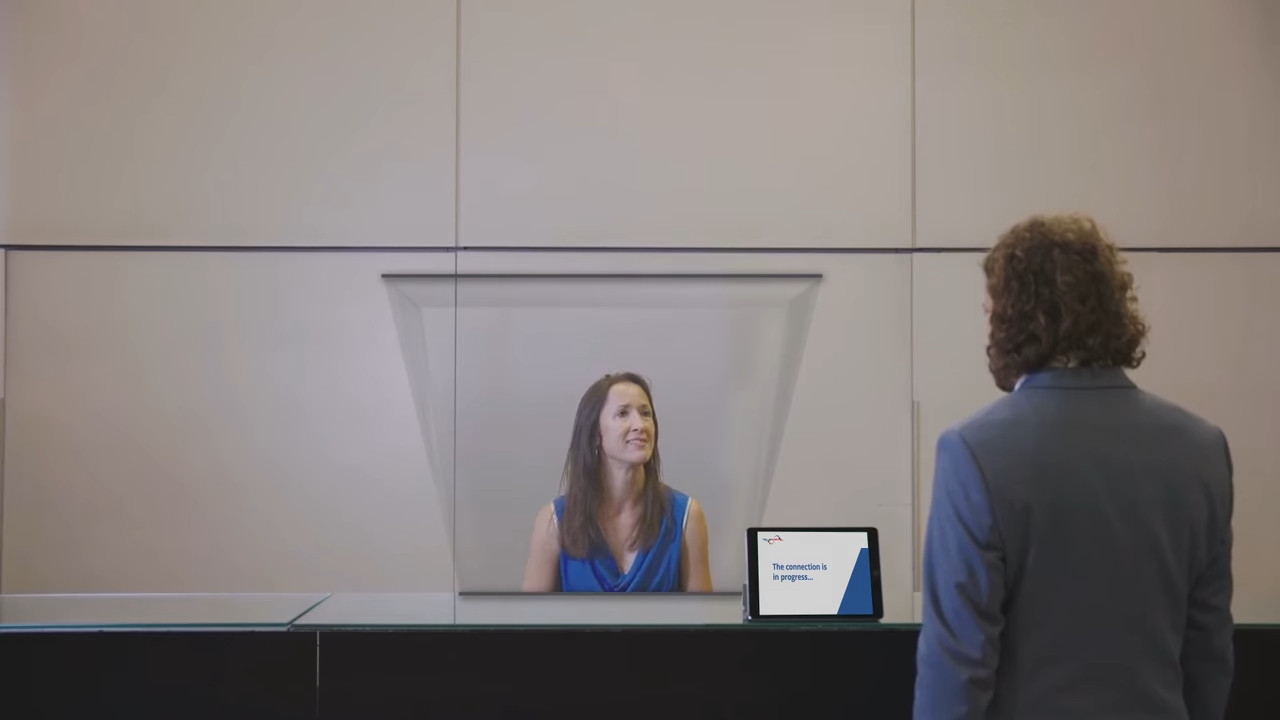
A hologram fan or holographic fan can create a striking visual effect designed to attract attention. But a spectacular image does not necessarily interact with the person.
Teleportel develops 3D telepresence solutions designed to create a stronger sense of presence for a remotely located person.
Attract attention with the visual experience. Then enable genuine interaction with a person or service.
Transparent Screen: Show the Product Without Hiding the Digital Experience
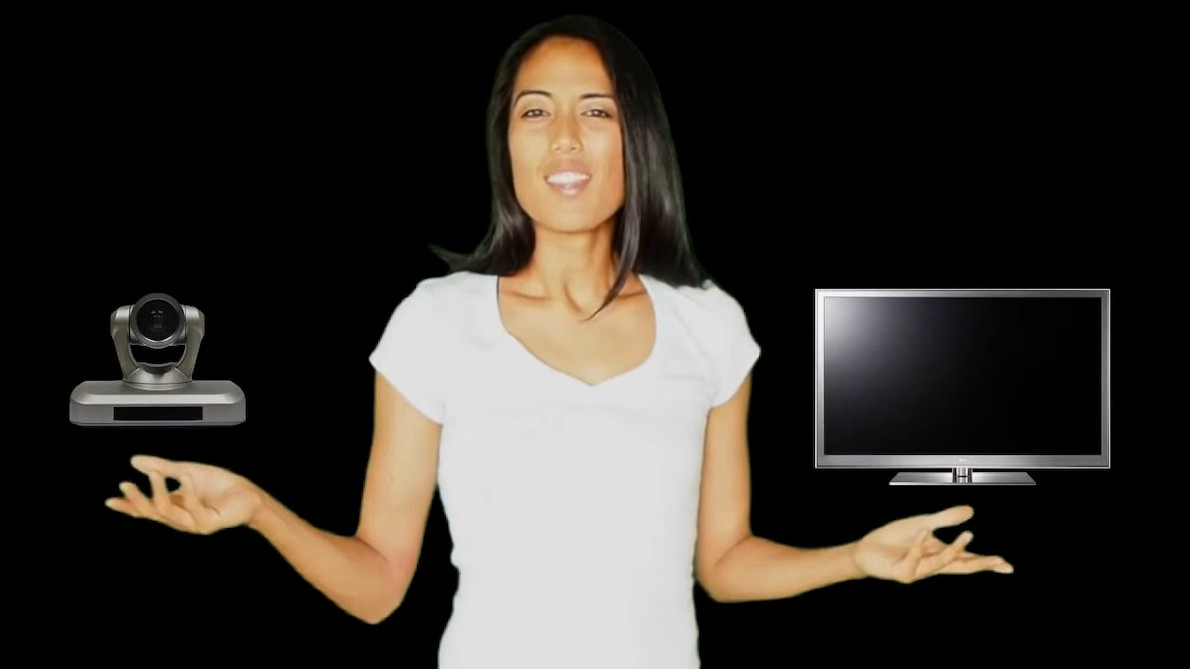
A transparent screen can combine digital content with visibility of the surrounding environment or a product behind the display. This can be attractive in shop windows, showrooms, museums, events and product presentations.
The content attracts. The user approaches. An interface lets them explore. If needed, the experience can then connect them with AI or a remote human advisor. Teleportel can be considered a complementary service layer around the visual experience.
Restaurant Ordering Kiosk: Going Beyond Ordering
The restaurant ordering kiosk has familiarized millions of consumers with self-service. The McDonald's kiosk is one of the most recognizable examples of this behavioral shift.
But why limit the model to food ordering? The same interaction principle can support reception, registration, booking, assistance requests, identification, wayfinding, document delivery and access to a service.
Connected Coffee Table, Touch Table and Interactive Tables
A connected coffee table transforms furniture into a digital surface. A touch table enables interaction directly on a horizontal interface. Touch tables and interactive tables can fit showrooms, reception areas, stores, museums, meeting rooms and events.
The screen is only the interface. The experience can potentially connect to data, business systems, content, AI assistance or a remote person. Teleportel can explore customized projects when the requirement goes beyond a traditional kiosk.
Digital Display: From Information to Service
A digital display delivers information.
But if the user can interact with it, information can become a service.
Imagine:
This evolution is particularly relevant in locations where visitors need information but where it is not realistic to have an employee permanently available.
Advertising Panels and Advertising Displays: What Happens After Someone Sees the Advertisement?
Advertising panels and advertising displays primarily seek attention. But what happens after the person becomes interested?
- Explore more information
- Browse a catalog
- Request a quotation
- Scan a QR code
- Contact a service
- Speak to an advisor
The objective is not necessarily to replace advertising. It is to create an interactive next step after attention has been captured.
LED Advertising Screen and LED Advertising Panel
An LED advertising screen or LED advertising panel can make a message extremely visible. Visibility and interaction, however, are different functions.
LED Advertising Screen and LED Advertising Panel

An LED advertising screen or LED advertising panel can make a message extremely visible.
- But visibility and interaction are two different functions.
- LED attracts attention.
- An interactive kiosk can take over from there.
- For example:


In a showroom, shopping centre, event or commercial space, advertising content can therefore become the beginning of a journey rather than its end.
Photobooth Kiosk: A Camera Can Do Much More Than Take a Photo
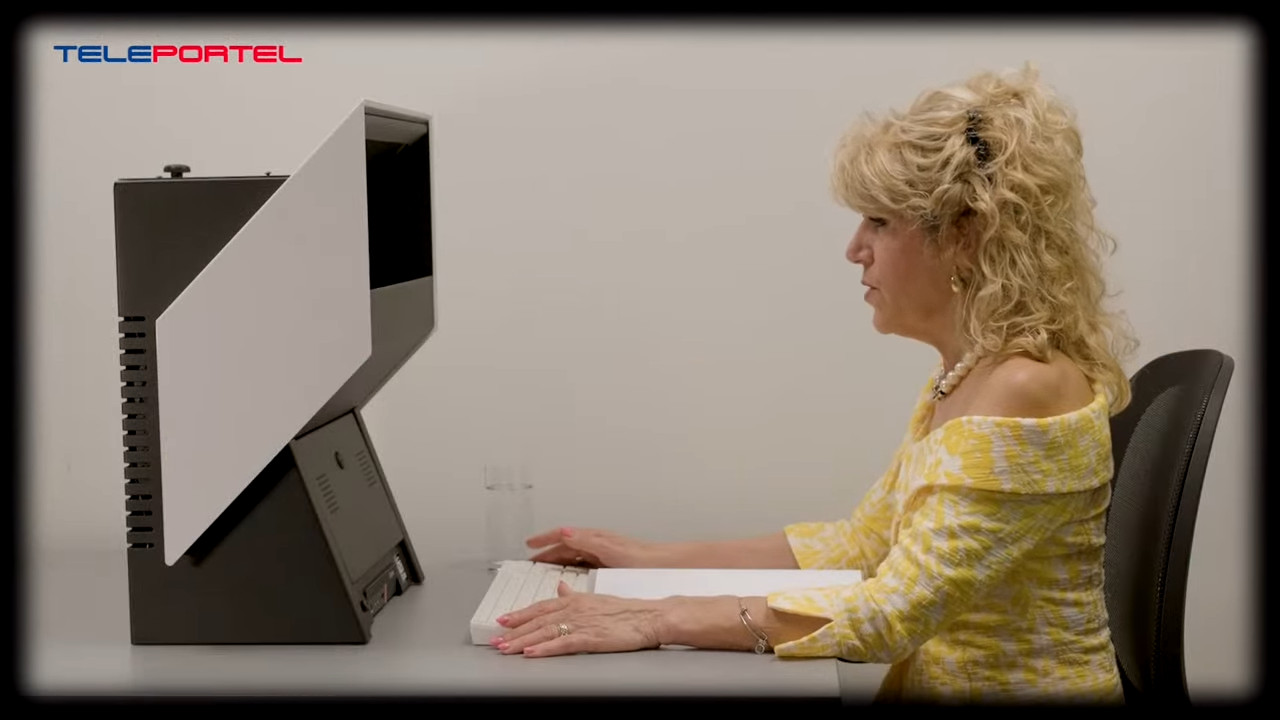
A photobooth kiosk already combines several components found in interactive kiosks: a screen, camera, user interface, software and sometimes a printer.
Those same components can serve different journeys. The camera can support video communication. The screen can become interactive. The printer can produce a badge or document. A reader can scan a QR code. The interface can connect the user to a service.
In-Store Display: Transform the Screen into a Digital Salesperson

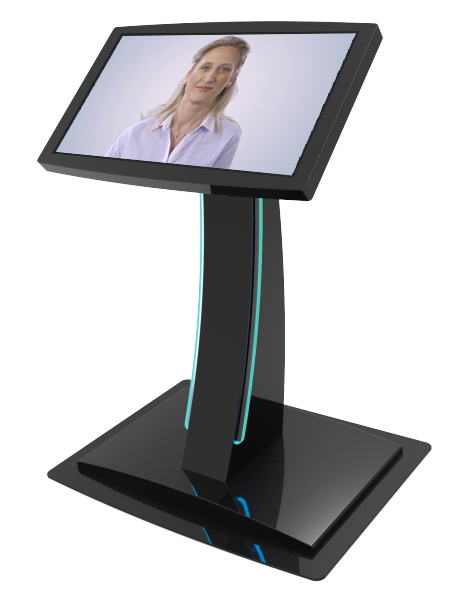
An in-store display generally presents products, promotions or information. Now imagine a store where the screen can also connect the customer immediately with an expert.
Product unavailable? A remote advisor can intervene. Need an explanation? AI can handle initial questions. Is the request becoming complex? A real employee can take over.
An in-store advertising screen can therefore evolve into a genuine service point.
Video Totem: A Vertical Location That Can Become Interactive

A video totem is well suited to lobbies, stores, trade shows, events and high-traffic spaces. Traditionally it displays content, but the same footprint can support a much richer experience.
- Touchscreen
- Camera
- Microphone & speaker
- Scanner
- QR code
- RFID or NFC
- Printer
- Artificial intelligence
- Remote human connection
A video totem can therefore evolve from a display medium into an interaction point.
Display Signage and Advertising Display Panels

Display signage generally describes the digital presentation of information or content. Teleportel pushes the idea toward interaction: the display can become an entry point to a service.
An advertising display panel can generate visibility, while an interactive device positioned in the same journey can transform that interest into action: the visitor sees, approaches, explores, asks a question and connects to the right service.
Advertising Display Panel: Turn an Audience into Interaction
An advertising display panel can generate visibility.
But visibility alone does not always create immediate action.
An interactive device placed along the same journey can turn interest into interaction.
- The visitor sees.
- They approach.
- They explore.
- They ask a question.
- They are connected to the right service.
This continuity between advertising and service is another way to imagine the digital space.
Real-Estate Agency Display: What If the Agency Could Respond Even When the Advisor Isn't There?

A real-estate agency display traditionally presents available properties. Imagine a shop window or space where someone can browse a property and immediately request more information.
The visitor could explore properties, select one, ask a question and — depending on the solution — connect with a remote advisor. The agency can extend interaction beyond the physical availability of an advisor inside the office.
Directional Speaker: Send Sound Where It Is Needed

A directional speaker is designed to focus sound more precisely within a defined area.
Audio management is important in an interactive-kiosk environment.
A person communicating with a remote agent needs to hear the conversation clearly without necessarily broadcasting sound throughout the entire lobby.
Depending on the project and environment, different audio architectures can therefore be considered to improve the experience and privacy.
In-Store Sound System: From Ambient Sound to Conversation

An in-store sound system is generally used to broadcast music, announcements or messages.
An interactive kiosk has a different audio requirement: enabling a clear conversation between the user, a digital interface or a remote agent.
The two systems can serve different functions within the same environment.
One creates the overall atmosphere.
The other supports a targeted interaction.
Teleportel: Connecting All These Ideas Around the User
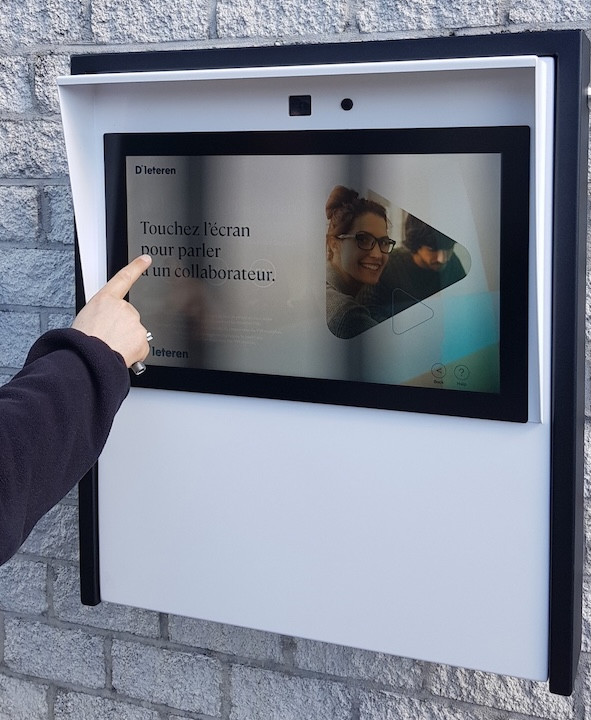
At first glance, EV charging, digital classrooms, dynamic displays, hologram fans, transparent screens, ordering kiosks, interactive tables, advertising panels, photobooths, retail displays and video totems appear to be completely different topics.
They often share one characteristic: a person is standing in front of a device or occupying a physical space.
That is where Teleportel becomes interesting. What could happen if that person could immediately interact, identify themselves, make a request, scan, print, gain access, talk, receive guidance, get help, or connect with a real person?
2D, 3D, AI and Humans
Not every location needs the same experience. Some projects need a 2D touchscreen and video. Others can benefit from 3D telepresence. Routine interactions may be automated or assisted by AI, while situations requiring a person can connect the user to a real agent.
RFID, NFC, QR, Badges and Access Control
Depending on the project, a kiosk can be associated with RFID, NFC, QR codes, badges, scanners, printers, readers and access control. A visitor can move from information to identification and then, according to permissions and integrations, to access.
Drivers, Logistics and Remote Registration
A driver arriving at a logistics site may need language selection, identification, scanning, instructions, documents, wayfinding, access and assistance. A digital workflow can automate standard steps and bring in a remote team when needed.
One Central Service for Multiple Locations
An organization with multiple offices, parking facilities, warehouses or entrances can centralize part of its reception and assistance. The building remains local. The service can become centralized.
2D, 3D, AI and Human: Choose the Right Experience
Not every location needs the same experience.
For some projects, a 2D kiosk with a touch screen and video is enough.
For others, a 3D telepresence experience can create a much stronger sense of presence.
Some requests can be handled automatically.
Others can benefit from artificial intelligence.
And when a person is needed, the user can be connected to a real agent.
The objective is therefore not to systematically replace people.
The objective is to place the right level of service in the right location.
RFID, NFC, QR, Badges and Access Control

Interaction becomes even more useful when it is connected to the building's physical processes.
Depending on the project, a kiosk can be associated with technologies such as:
RFID, NFC, QR code, badges, scanners, printers, readers and access control.
A visitor can therefore move from information to identification and then, depending on the planned permissions and integrations, to access.
For a company, hotel, industrial site, car park, building or logistics environment, the kiosk can become the visible interface of a much broader workflow.
Drivers, Logistics and Remote Check-In
A driver arriving at a logistics site may also need an interface.
- Language selection.
- Identification.
- Information scanning.
- Instructions.
- Documents.
- Directions.
- Access.
- Assistance.


Instead of requiring a permanently staffed reception desk at every entrance, a digital solution can automate selected steps and allow a remote team to intervene when necessary.
One Central System for Multiple Sites
One of the advantages of remote reception is the ability to think about service across multiple locations.
An organization with different offices, car parks, warehouses or entrances may want to centralize part of its reception and assistance.
A remote team can then be made accessible from different physical points.
The building remains local.
The service can become centralized.
The Real Question: What Could Your Space Do?
- A car park already has users.
- A store already has visitors.
- A showroom already has products.
- A real-estate agency already has a window display.
- A company already has a reception area.
- A warehouse already has a driver entrance.
- A hotel already has a lobby.
- An EV charging station already has someone waiting.
- A screen already has an audience.
- Teleportel adds a new question:
What could we enable this person to do now that they are already here?
A customized project often starts with that question.