01
Encryption
Organizations should understand how meeting audio, video and related data are protected while communications are transmitted.
Secure Video Conferencing: Everything You Should Know About It. Government agencies, courts, correctional systems and other security-sensitive organizations need video communication that is operated with appropriate security controls and consistent best practices.
Heavy case loads, changing laws, overcrowded facilities and tight budgets make it increasingly difficult for courts and correctional systems to operate safely and efficiently. Secure remote video communication can help reduce unnecessary physical movement while supporting face-to-face interaction.


Video conferencing can provide substantial operational benefits, but those benefits are difficult to sustain without appropriate security measures. A poorly protected conferencing environment can expose organizations to cyber risks, unauthorized access or disclosure of sensitive communications.
Organizations should understand how meeting audio, video and related data are protected while communications are transmitted.
Only authorized participants should be able to enter security-sensitive meetings or access conferencing systems.
Security must be considered across the full environment, from endpoints and networks to conferencing infrastructure.
Secure technology still depends on appropriate configuration, administration and consistent operational practices.
Video conferencing solutions used by government agencies may carry sensitive operational, legal, administrative or personal information. Security and encryption therefore need to be considered as core requirements rather than optional features.
Government agencies should evaluate conferencing technology against their own applicable security policies, technical standards, risk assessments and compliance obligations.
Heavy case loads, changing laws, overcrowded facilities and tight budgets can make safe and efficient court and correctional operations difficult.
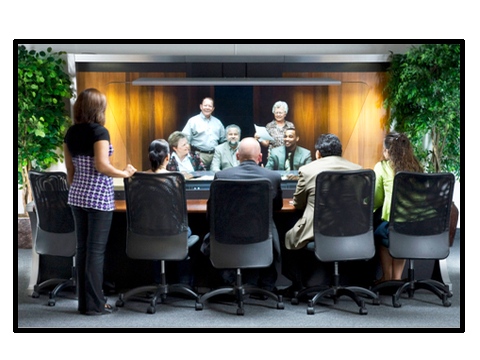
Where legally and operationally appropriate, video communication can connect participants without requiring every person to be physically present in the same facility.
Remote video can support face-to-face interaction while organizations maintain their own procedures for access, supervision and security.
Reducing unnecessary transport or movement can help organizations use personnel, rooms and other operational resources more efficiently.
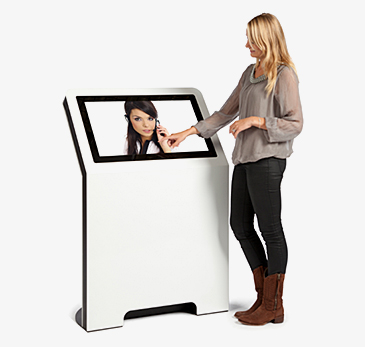
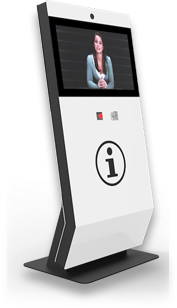
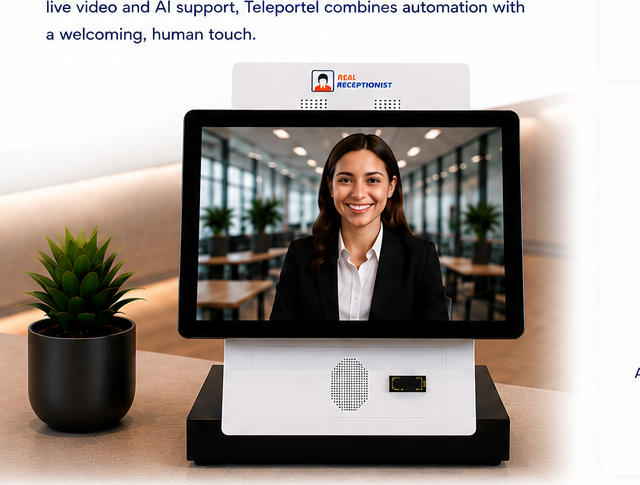
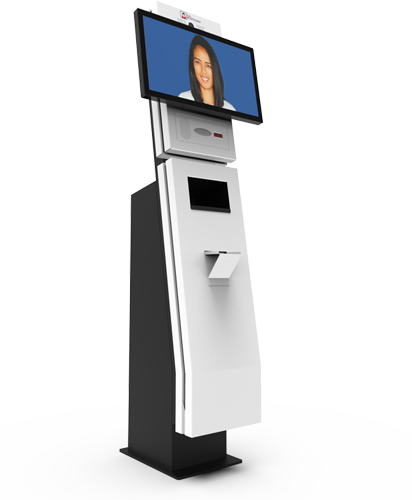
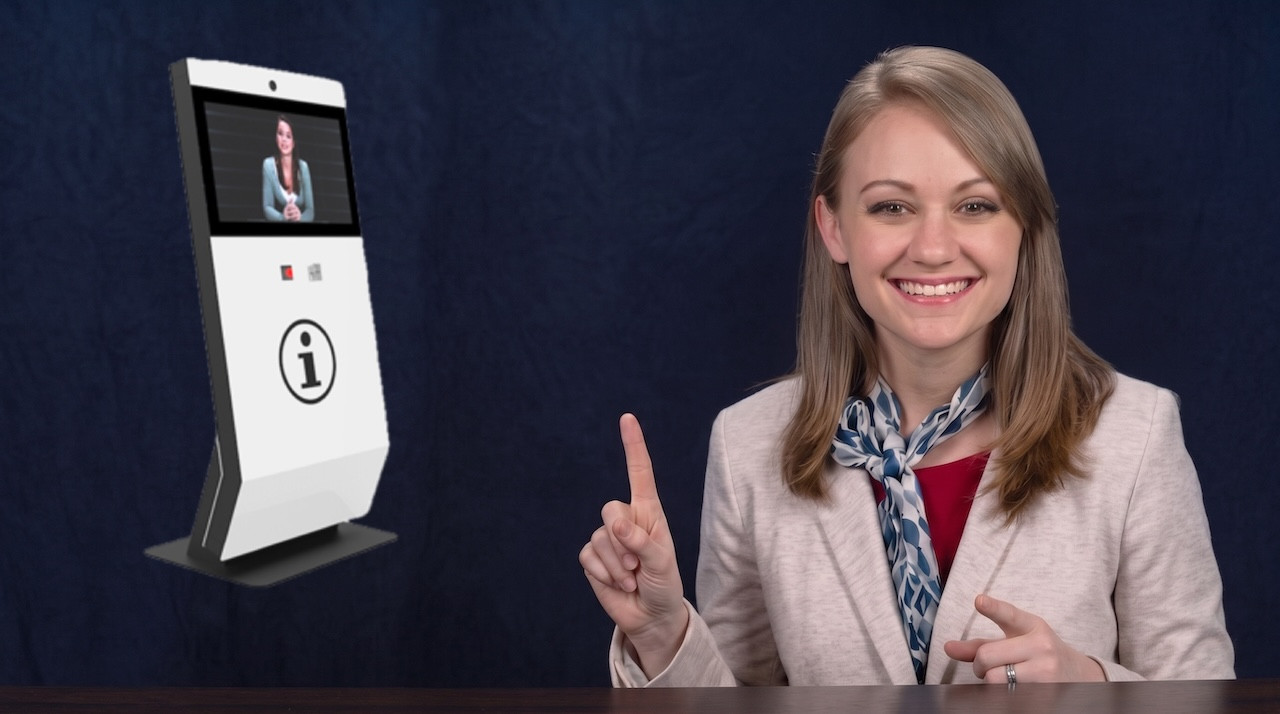
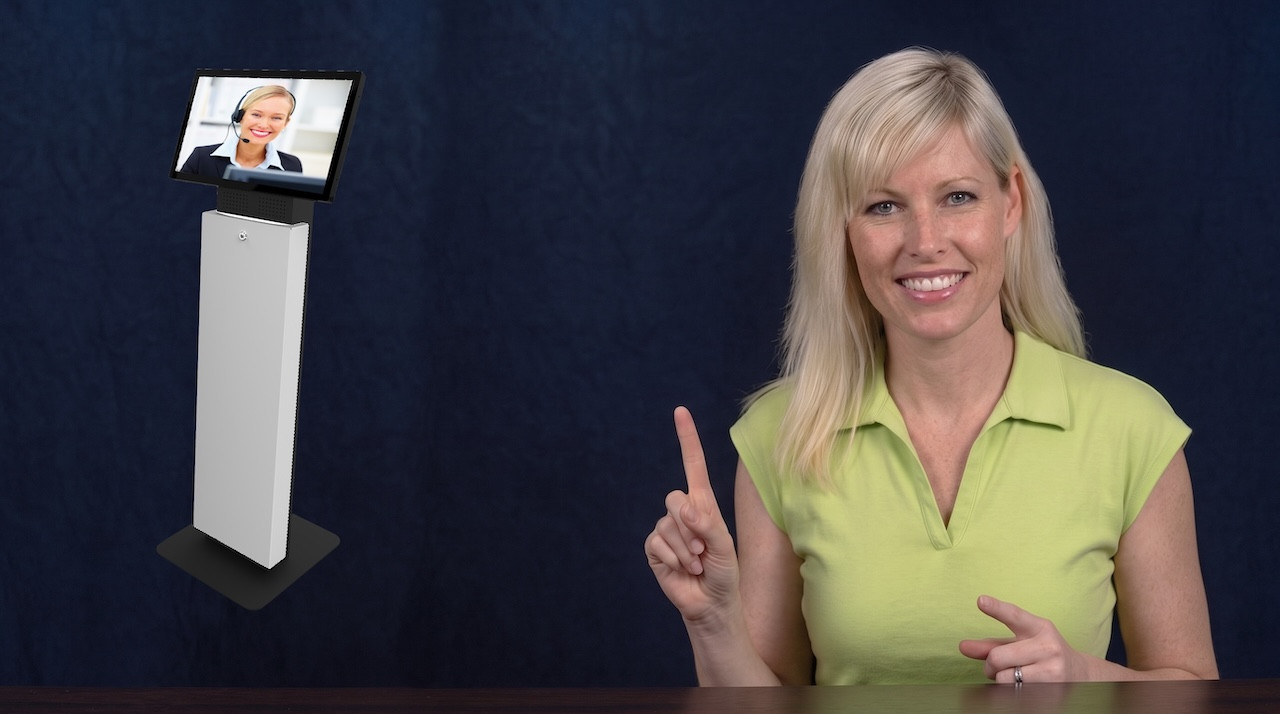
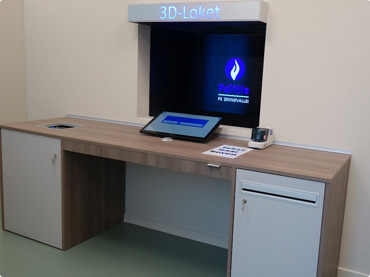
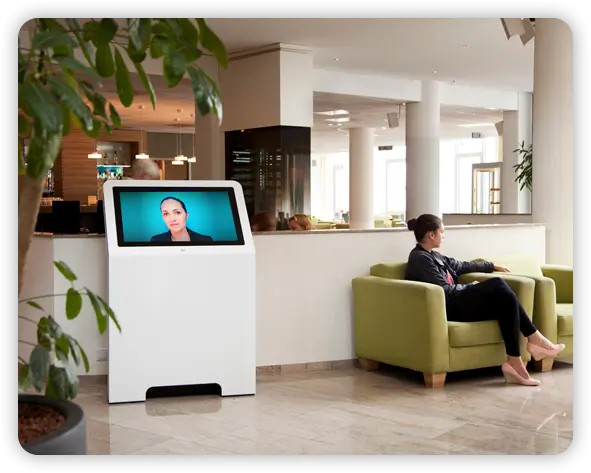
Combine Teleportel software with the touchscreen format that best matches your reception environment and visitor management process.
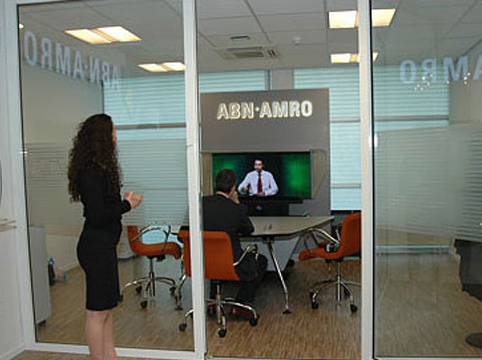
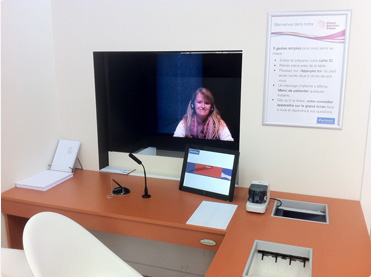
Reception requirements vary by location. Digital visitor management can support the way guests, patients, contractors and other visitors arrive in different environments.
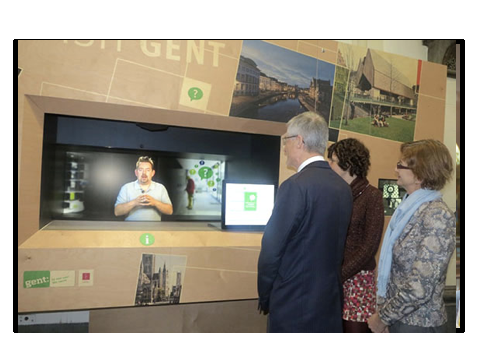
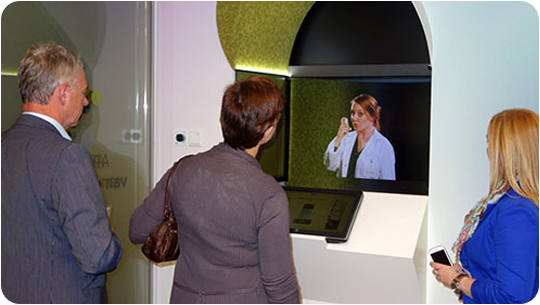
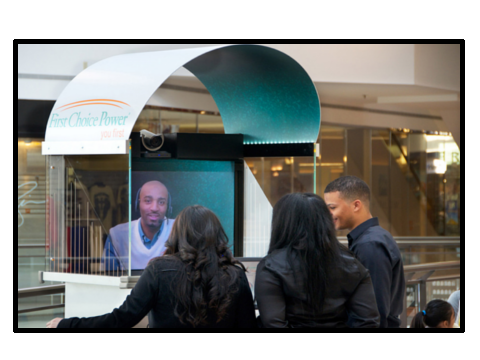
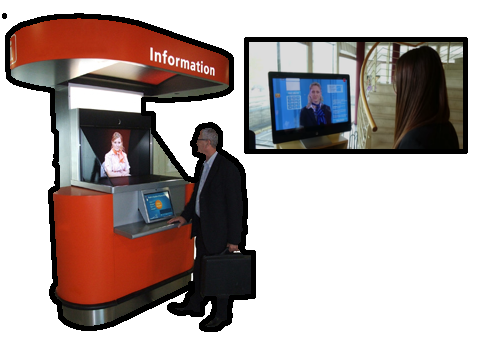
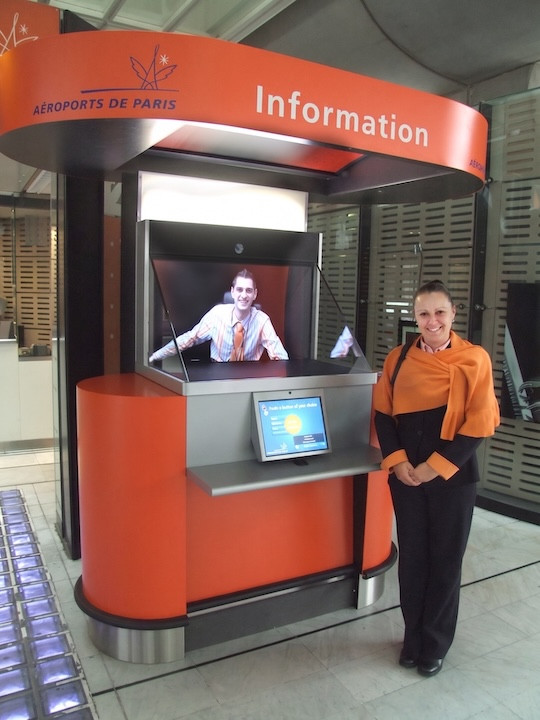
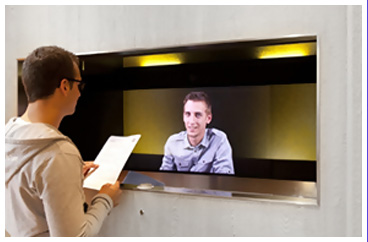
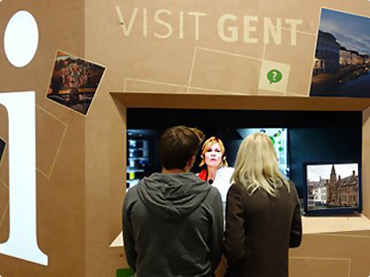
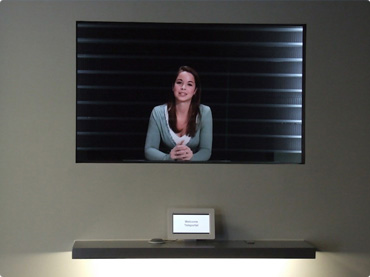
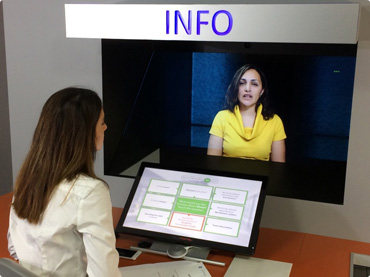
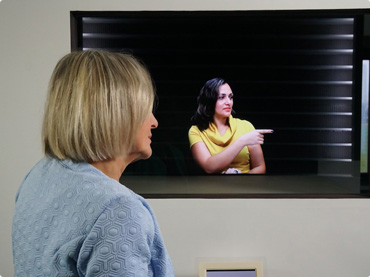
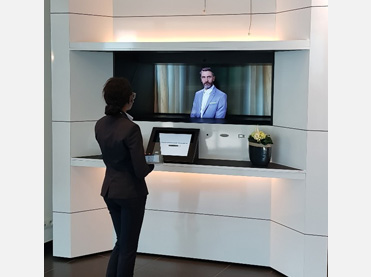
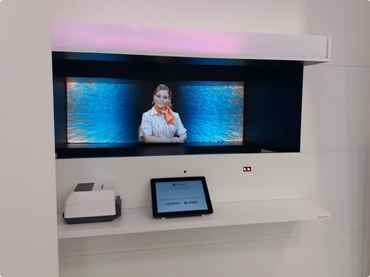
Teleportel's patented 3D Holographical Reality™ is designed around presence rather than simply displaying a remote video feed. The receptionist appears life-sized and in 3D, with aligned eye contact, while the camera and screen remain outside the visitor's view.
The effect is intentionally different from ordinary 2D displays and from consumer “3D TV” concepts that require goggles. No glasses are needed. The objective is an immersive, authentic interaction in which the person on the other side feels much closer to being in the same room.
The sound is also positioned so that it seems to come from the person rather than from an obvious loudspeaker, reinforcing the overall sense of presence.
More About Holographical Reality™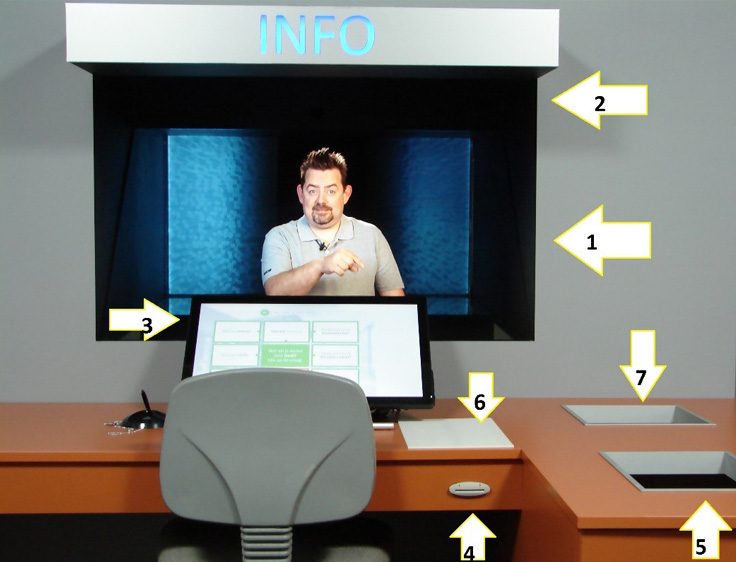
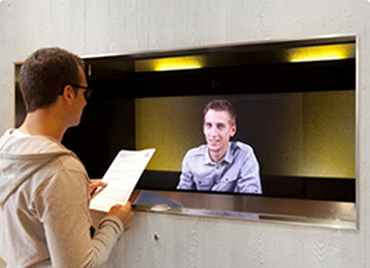
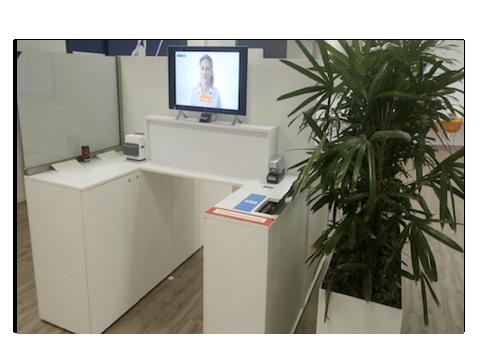
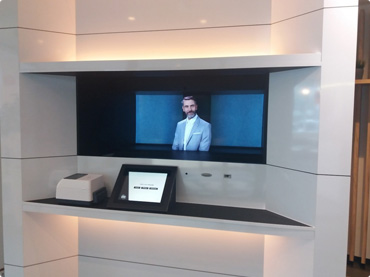
Teleportel In-Wall™ installations can be adapted around the architecture, reception workflow, branding and peripheral equipment required at each site.
Security cannot be reduced to a single feature. Organizations should consider how endpoints, infrastructure, user accounts, networks and meeting procedures work together.
Devices used for video communication should be securely configured, maintained and restricted to authorized users where required.
Organizations should understand where communications are processed, how systems are administered and what security controls protect the conferencing environment.
Even strong technical controls can be undermined by weak passwords, uncontrolled invitations, outdated software or inappropriate meeting practices.
The supplied source describes security features across a vendor's full range of solutions and states that endpoints and infrastructure can include features designed to meet stringent industry standards. For procurement, such claims should be verified against current technical documentation and the specific standards that apply to the organization.
The source also references Tixeo as a secure video conferencing solution offering UltraHD video conferencing and multipoint collaboration. Because security capabilities and product claims can change, organizations should verify current certifications, encryption architecture and deployment options directly with any provider before making a security-sensitive decision.
For government and military use, “secure” should be demonstrated—not assumed. Match the conferencing architecture to the organization's threat model, applicable standards, information sensitivity and operational procedures.
Secure communication is only one part of Teleportel's customer-facing technology. Teleportel also offers intelligent parcel locker systems for automated package delivery, secure parcel storage and digitally assisted self-service.
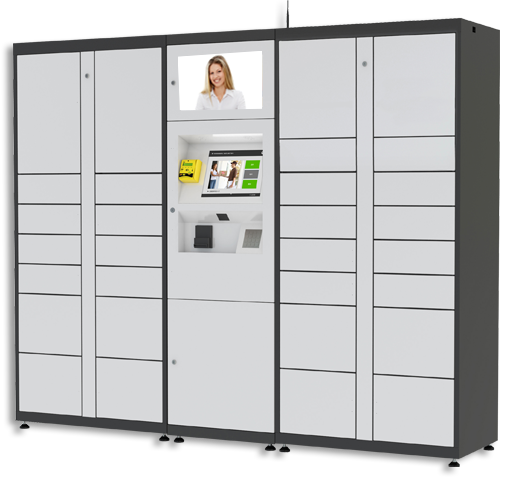
Electronic lockers provide a controlled collection point for packages and can reduce dependence on direct handover.
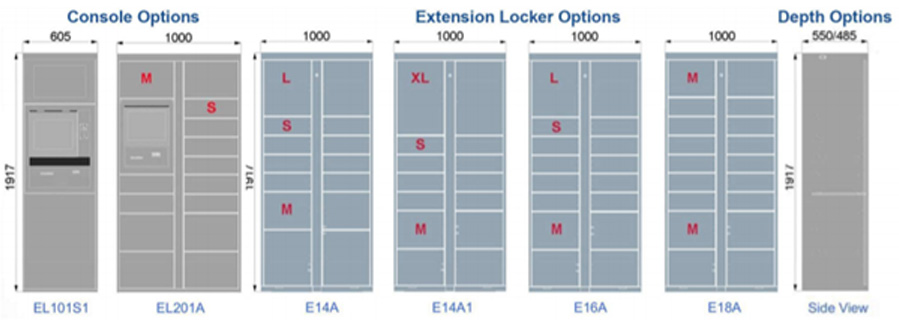
Locker systems can be configured around parcel volumes, available space and the organization's delivery workflow.
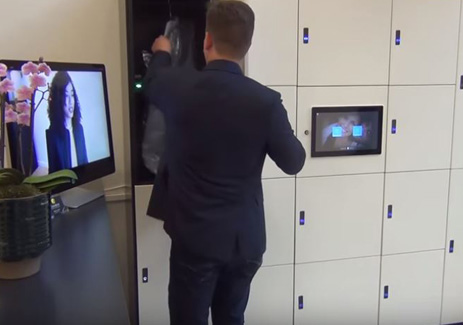
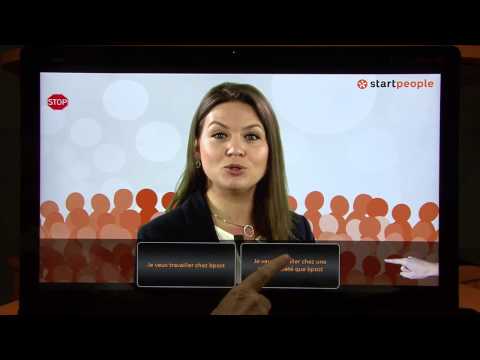
Teleportel's live-interaction expertise can combine automated parcel collection with access to a remote person when assistance is required.
See how remote video interaction can support customer-facing, public-sector and distributed communication environments.
Direct answers about secure video meetings for government, courts, correctional systems and other security-sensitive organizations.
Secure video conferencing is remote video communication operated with appropriate safeguards such as encryption, authentication, controlled access, secure configuration and consistent operational practices.
Government meetings can involve sensitive information, so conferencing technology needs to be evaluated against the organization's security policies, encryption requirements, risk assessment and applicable standards.
Where legally and operationally appropriate, remote video can connect participants while reducing some unnecessary travel or movement between locations.
No. Encryption is important, but security also depends on authentication, access controls, endpoint and infrastructure security, software maintenance, administration and user practices.
Use conferencing systems consistently with security best practices, control meeting access, maintain software, protect accounts and endpoints, review administrative privileges and align configuration with organizational security policy.
They should verify current encryption details, deployment architecture, certifications or standards claims, data handling, administrative controls and whether the solution satisfies their specific procurement and security requirements.
Yes. Teleportel also offers electronic parcel locker systems for automated delivery, secure package storage and digitally assisted customer service.