Unmanned & 24/7 Reception

Unmanned &
24/7 Reception

Intelligent, secure reception services —
unattended or available around the clock

Discuss Your Unmanned Reception Project

Since 200154 specialized building blocks

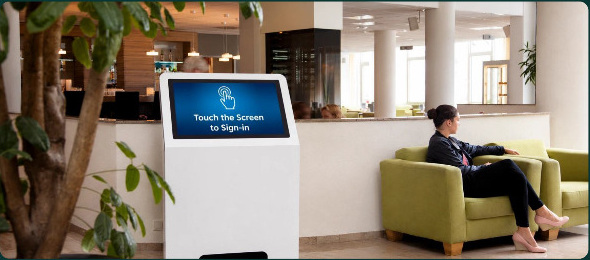
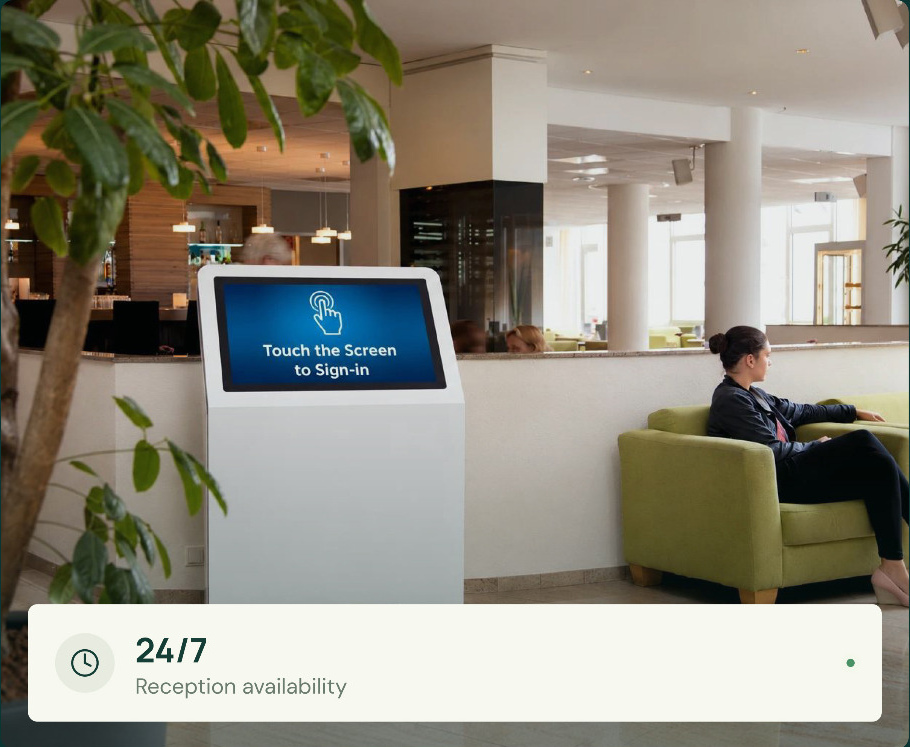
A visitor reception kiosk in a modern lobby with a 24/7 reception availability indicator

THE TELEPORTEL APPROACH

A smarter approach to
reception management

2001

Innovating reception

54

Specialized building blocks

Since 2001, Teleportel has been developing innovative ways to transform how organizations welcome, assist and manage visitors. By combining digital technologies, artificial intelligence and interactive video communication, we have created a comprehensive reception framework that can be adapted to a wide variety of operational environments.

At the heart of our approach is a modular architecture consisting of 54 specialized building blocks. Rather than offering a standardized, one-size-fits-all product, Teleportel selects and combines the appropriate capabilities to create a reception solution that reflects each customer’s specific requirements.

Every reception has its own challenges

The reasons for modernizing a reception area can vary considerably. Some organizations want to reduce operating expenses by limiting permanent staffing or external reception contracts. Others aim to streamline administrative activities so employees can focus on higher-value responsibilities.

For other organizations, the priority is a smoother visitor experience, a more innovative corporate image or stronger site security through integration with access control and visitor management systems. Because these priorities differ, Teleportel does not impose a fixed reception concept. Our modular approach supports a tailored, cost-conscious solution that can be implemented efficiently.
A RECEPTION THAT WORKS FOR YOU

Unmanned & 24/7 Reception:
flexible service with or without
on-site staffing

An unmanned or continuously available reception offers the potential to reduce routine staffing requirements while maintaining a structured, welcoming and secure visitor journey. Achieving that result, however, requires more than installing a self-service kiosk. The entire reception process must be assessed, redesigned and tested for normal operations as well as exceptional circumstances.

An unmanned reception should not simply replace the receptionist. It should intelligently redesign the reception process.

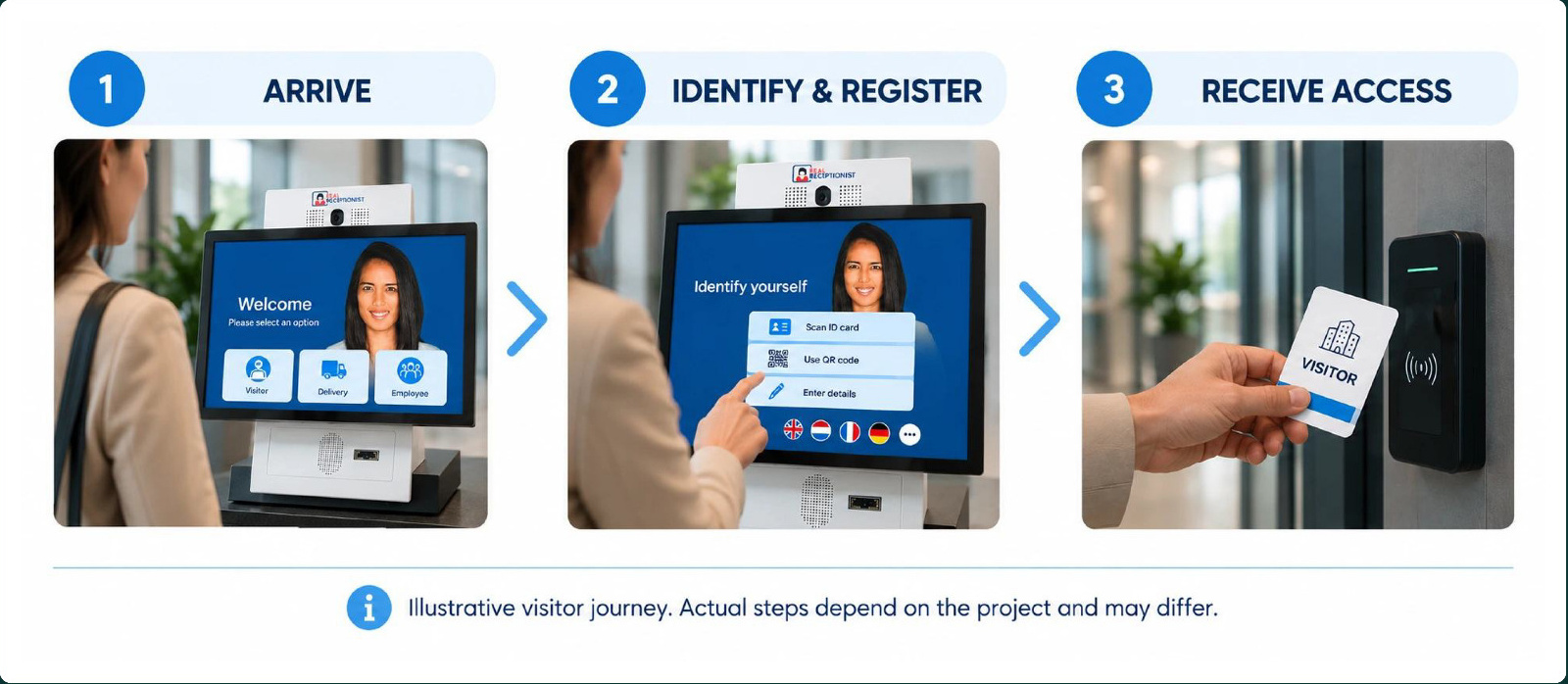
Three stages of the reception visitor journey: Arrive, Identify and Register, and Receive Access. Illustrative visitor journey; actual steps depend on the project.
01

Start with a detailed process analysis

Together with the customer, Teleportel analyzes the existing reception environment, defines the requirements for the future unmanned reception and evaluates different approaches to achieving the desired result. The resulting visitor workflows, decision rules, integrations and escalation procedures are documented before configuration begins.

The analysis covers routine visits, deliveries, unexpected arrivals and other relevant scenarios, alongside risks, operational gaps and contingency measures. It also establishes when human involvement may still be necessary. Depending on the situation, an authorized person can assist on-site, by telephone, through a live video connection or via an email or SMS notification.

02

Protect people, premises and the reception kiosk

In an unattended environment, visitor authorization and physical security must be built into the reception design. The application may interact with access control, visitor management and building security systems to verify permissions, grant or deny entry and initiate defined actions in response to alarms, unauthorized attempts or other incidents.

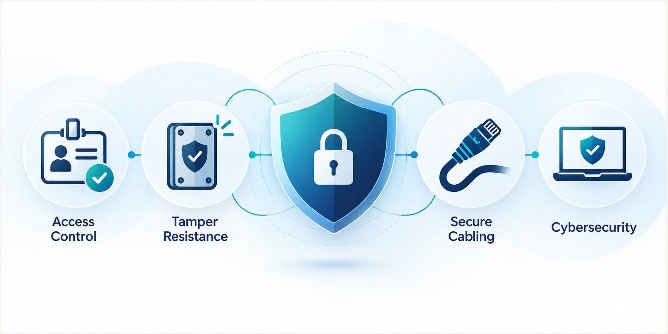
The kiosk itself also needs protection because it may operate without direct supervision. Depending on the location and risk assessment, this can include a tamper-resistant enclosure, protection against damage or theft, secured and inaccessible-to-visitors power and network cabling, and effective hardware and software hardening of the internal computer. Cybersecurity safeguards should cover restricted access, secure communications, updates and the protection of visitor data.

Security measures: access control, tamper resistance, lock protection, secure cabling and cybersecurity
03

Make the visitor experience effortless

An unattended reception only works when visitors can complete their tasks independently. Teleportel follows a straightforward design principle: “Don’t make the guest think.” If visitors have to stop and work out what to do next, the workflow may be too complex.

As practical design guidelines, we recommend no more than three steps for a typical process, where feasible, and no more than three clear action buttons per screen. Instructions should be short, consistent and available in the visitor’s preferred language. The exact interface must also accommodate security requirements and visitors who need additional assistance.

Where useful, a virtual avatar can welcome visitors, explain what is expected and guide them through the process. Its appearance, language, tone and content are agreed with the customer rather than imposed as a standard feature.

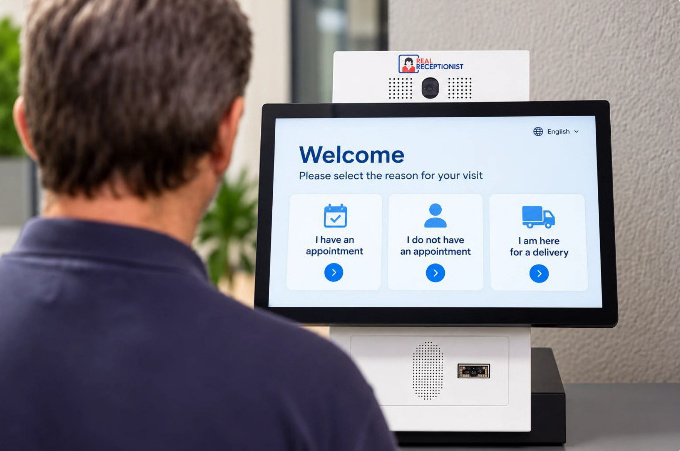
Visitor using a Teleportel self-service reception kiosk with three clearly labeled options
04

Integrate registration, safety checks and badge issuance

Depending on the requirements, the reception can combine pre-registration, on-site check-in, identification, host notifications, badge printing, electronic badge issuance (for example RFID credentials) and automated access authorization in one coordinated visitor journey.

In facilities with safety or compliance requirements, visitors may first view a safety briefing and answer questions. Based on predefined rules and their results, the application may issue or withhold a badge, request further verification or refer the case to an authorized person. This helps make important instructions and checks consistent and traceable.

05

Plan for business continuity and complete outages

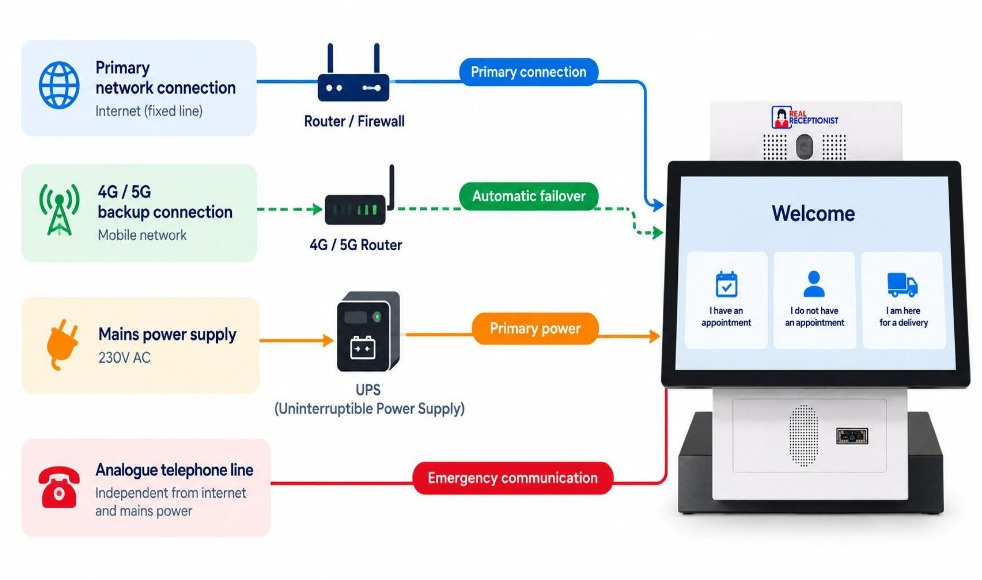
An unattended reception must also have a defined response when equipment, power or communications fail. The customer and Teleportel agree which functions must remain available, how failures are detected, and when visitors or staff should follow alternative procedures.

  • 4G/5G failover connectivity if the primary data connection is unavailable.
  • An uninterruptible power supply (UPS) for selected critical components, sized for the required backup period.
  • Automated fault alerts and escalation to designated personnel when the supporting systems remain operational.
  • A separately provisioned analogue telephone line as an emergency communication fallback during a complete loss of kiosk power and data connectivity, provided the line and telephone equipment can operate independently of the affected power and network infrastructure.
  • Documented manual or human-assisted fallback procedures for situations in which automated processing cannot safely continue.

The availability of a genuine analogue line and its operation during a local or wider telecommunications outage must be verified with the telecom provider. An analogue-style handset connected to a VoIP router is not, by itself, an independent backup.

Diagram showing primary internet, automatic 4G/5G failover, UPS power, and emergency analogue telephone connectivity supporting a reception kiosk
06

Combine digital reception, AI and remote assistance

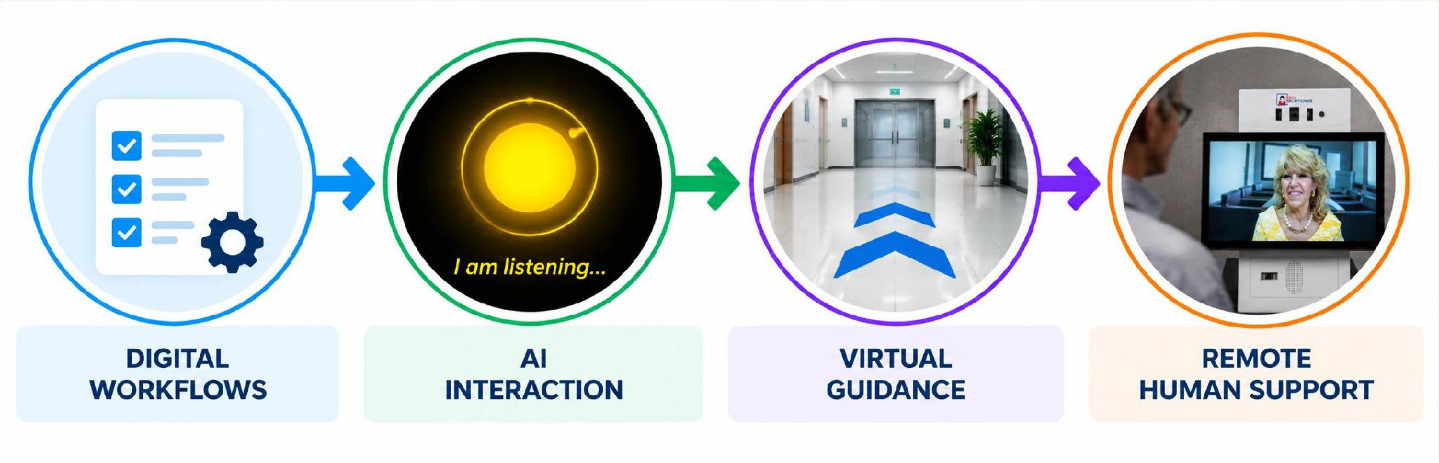
Teleportel brings several complementary technologies together in a single visitor-facing application. Digital reception functions manage structured tasks such as registration, notifications, access decisions and credentials. AI can support interactions and communication with hosts and connected backend systems. Virtual avatars can deliver guidance, while a remote employee may step in through video, telephone or another defined channel when needed and feasible.

The aim is not to introduce technology for its own sake. It is to create a coherent experience in which routine steps are automated and exceptions are handled appropriately.

Reception process combining digital workflows, AI interaction, virtual guidance and remote human support

Provide reception availability around the clock

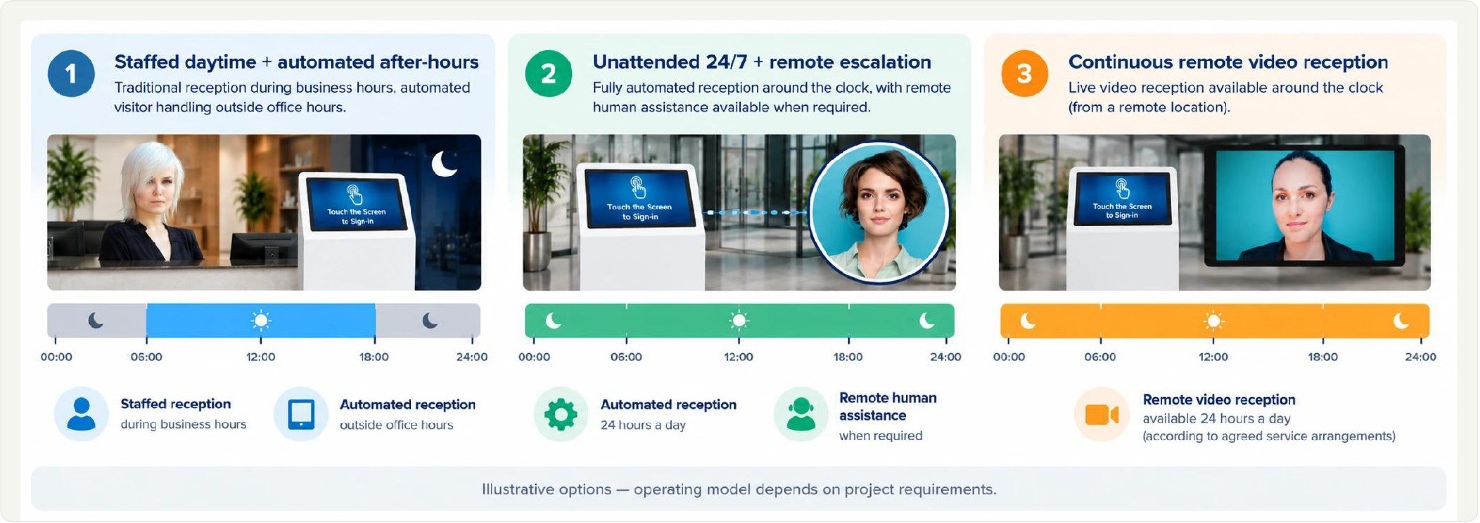
Organizations with visitors, contractors, deliveries or employees arriving outside standard office hours may need a reception service that remains available during evenings, nights, weekends and public holidays. Teleportel can configure a 24/7 reception model using automated check-in, AI interaction, access control, virtual guidance and, where required, remote human assistance.

A 24/7 reception does not necessarily mean a fully unmanned reception. One site may retain an on-site receptionist during the day and switch to automated processes after hours. Another may operate without permanent on-site staff at any time, with defined escalation to a remote receptionist or authorized employee. Where continuous live human service is required, the necessary staffing and service arrangements must be agreed separately.

Continuous availability also makes resilience especially important. Power, connectivity, hardware faults, security alarms and exceptional visitor situations must have defined contingency procedures. The intended operating hours, response times, access policies and fallback measures are established during the customer-specific analysis.

Three reception operating models: staffed daytime plus automated after-hours; unattended 24/7 with remote escalation; and continuous remote video reception. Includes timelines and service roles.

Improve performance using reporting and visitor feedback

Go-live is the beginning of ongoing refinement. Teleportel can include short visitor surveys to capture whether the process felt clear, quick and easy to use. The reporting module can complement that feedback with operational measurements such as arrival patterns, waiting times, processing durations, assistance requests and points where visitors abandon or struggle with a workflow.

By reviewing visitor feedback alongside these statistics, organizations can identify bottlenecks, adjust instructions and continuously simplify the reception experience. An effective unmanned reception evolves according to how people actually use it.

Implement in controlled phases

For many projects, Teleportel recommends a two- or three-phase rollout rather than an immediate switch to fully unattended operation. An initial phase may validate essential workflows under supervision; a subsequent phase may expand automation and remote assistance; and a final phase may introduce the agreed unattended operating model.

The precise phases depend on the site, security requirements and integration complexity. This approach gives the customer time to test visitor behaviour, identify unexpected events and correct issues before they affect operational effectiveness or security.

See it in action

See how the technologies can work together

A tailored solution, not a standard product

This video is provided for illustration purposes only. It demonstrates possible ways of combining digital reception processes, AI, virtual guidance and remote human assistance; it does not represent a standard Teleportel reception configuration or a predefined solution.

The actual configuration is determined jointly with the customer only after the relevant parameters, variables, visitor process flows, integration requirements, risks and contingencies have been identified, analyzed and discussed.

Your next chapter starts here

Discover the right reception operating
model for your organization

Teleportel touchscreen reception kiosk in a modern lobby

Whether the priority is reducing reception costs, improving visitor handling, strengthening access control or combining these objectives, Teleportel can help define a practical path to an unattended reception tailored to your organization.

Discuss your current reception, desired workflows and security requirements with Teleportel to explore the right configuration for your site.

Discuss Your Unmanned
Reception Project